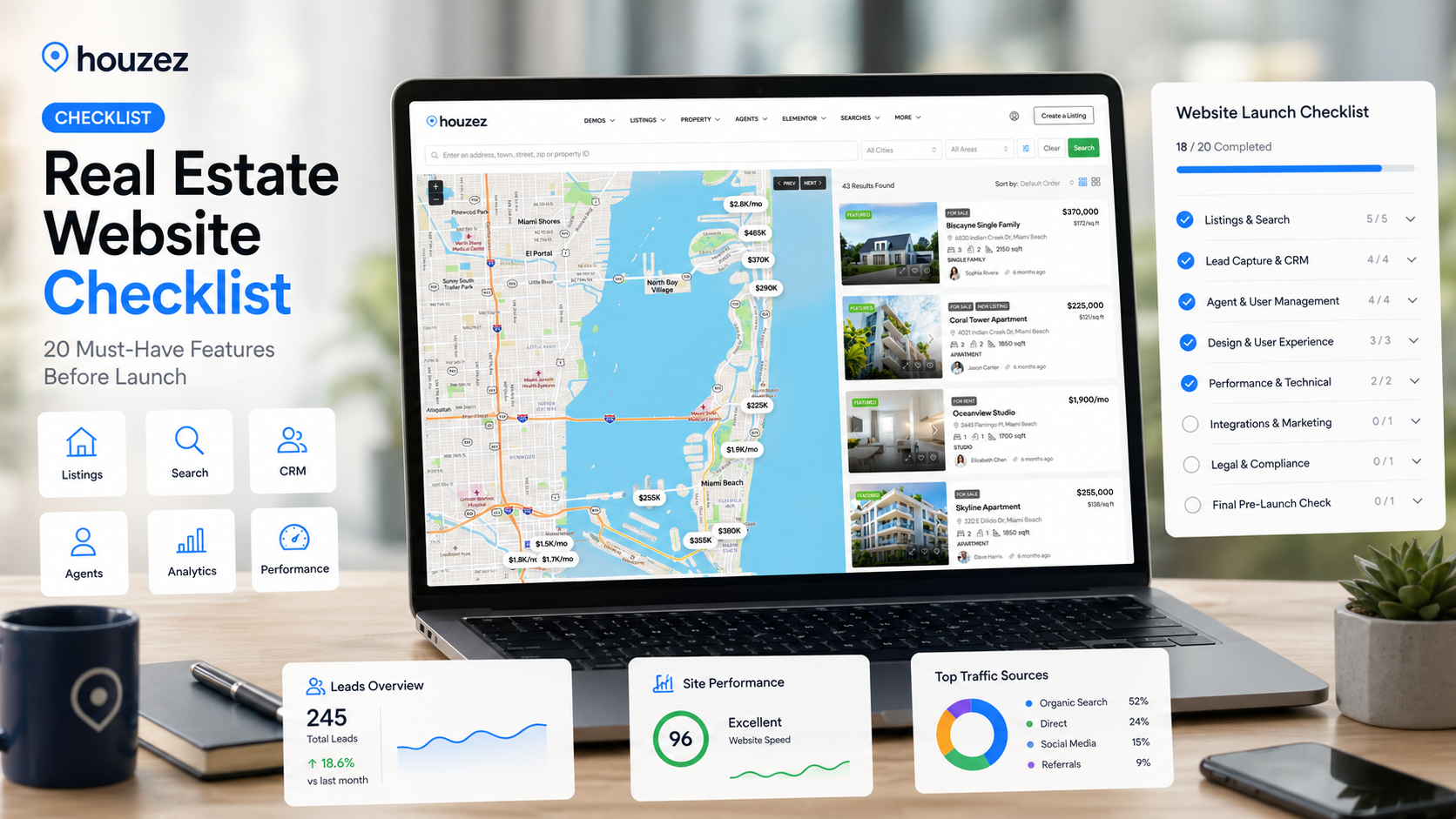
SEO for real estate agents is no longer optional. In 2026, the way buyers and sellers find their next agent has fundamentally shifted. According to the National Association of Realtors, over 97% of homebuyers use the internet during their property search. If your website does not appear in those results, you are missing out on a massive stream of potential clients.
At the same time, the cost of paid advertising continues to rise. Pay-per-click campaigns on Google and social media platforms are increasingly competitive and expensive. Many agents spend hundreds of dollars per lead with no guarantee of conversion. Search engine optimization offers a smarter long-term alternative.
Organic traffic — visitors who find your website through search engines without paid ads — is highly valuable. These visitors are actively searching for what you offer. They convert better, cost less over time, and keep coming.
This guide walks you through everything you need to know about SEO for real estate agents. Whether you are just getting started or looking to sharpen your existing strategy, you will find actionable advice at every step.
What Is SEO for Real Estate Agents?
Search engine optimization, or SEO, is the process of improving your website so it ranks higher in search results on Google, Bing, and other search engines. The higher you rank, the more people click on your site, and the more leads you generate.
For real estate agents, SEO works by aligning your website content with what buyers and sellers are actively searching for. When someone types “homes for sale in Austin TX” or “best realtor in Miami Beach,” your goal is to appear at the top of those results.
How Buyers and Sellers Search Online
Today’s clients are sophisticated searchers. They begin their journey months before contacting an agent. They search for neighborhood information, compare property prices, read market reports, and look for agent reviews — all before picking up the phone.
- Buyers search for: specific neighborhoods, school districts, price ranges, and property types
- Sellers search for: home valuation tools, local market conditions, and top-rated agents
- Both groups search for: agent reviews, local expertise, and recent sales data
Why Local Search Is Critical
Real estate is inherently local. A buyer looking for a three-bedroom home in Denver is not interested in listings in Dallas. This is why local SEO — optimizing your presence for geographically relevant searches — is the cornerstone of any real estate SEO strategy.
Google prioritizes local results for searches with location intent. Appearing in local results, including the Google Map Pack, can dramatically increase your visibility and lead volume.
Why SEO Is Important for Real Estate Professionals
Many agents rely on referrals, cold calls, or paid ads to generate business. SEO adds a powerful, cost-effective channel that compounds over time. Here are the key reasons why real estate SEO matters.
More Website Traffic
A well-optimized website attracts a steady stream of visitors every day. Unlike paid ads that stop working the moment you stop paying, SEO continues to deliver traffic long after the initial work is done.
Better Lead Quality
Organic visitors are actively searching for real estate help. They have clear intent. As a result, leads from organic search tend to be more serious and ready to act compared to cold audience advertising.
Lower Acquisition Costs
The cost per lead from SEO drops significantly over time. Once your pages rank, you earn traffic without paying per click. This makes SEO one of the highest-return activities a real estate agent can invest in.
Long-Term Growth
SEO is an asset that builds over time. Each new piece of optimized content, every backlink you earn, and each technical improvement compounds your visibility. Agents who invest in SEO early enjoy a compounding growth advantage over competitors who do not.
Competitive Advantage
Many real estate agents still rely on traditional marketing methods. By building a strong SEO presence, you can dominate local search results and capture clients before your competitors even know they existed.
Local SEO for Realtors

Local SEO for realtors focuses on ensuring your business appears in geographically relevant searches. It is the single most important area of SEO for agents who serve specific markets or cities.
Google Business Profile Optimization
Your Google Business Profile (formerly Google My Business) is your most powerful local SEO tool. It controls how your agency appears in Google Maps and the local search results panel.
To optimize your profile:
- Claim and verify your profile at business.google.com
- Choose the most accurate business category — typically “Real Estate Agent” or “Real Estate Agency”
- Add your full address, phone number, website URL, and business hours
- Upload professional photos of your team, office, and local area
- Write a detailed business description using relevant keywords naturally
- Post regular updates, property highlights, and local market news
Reviews and Ratings
Reviews are a critical local ranking factor. Google rewards businesses with frequent, high-quality reviews. More importantly, potential clients read reviews before reaching out.
Build your review count by asking satisfied clients after each closing. Make it easy by sending a direct review link. Respond professionally to every review — both positive and negative.
Local Landing Pages
Create individual pages on your website for every neighborhood, city, or district you serve. For example:
- “Homes for Sale in South Beach Miami”
- “Coral Gables Real Estate Agent”
- “Brickell Condos for Sale”
Each page should include local market data, school information, community highlights, and relevant listings. These pages capture highly targeted, high-intent searches.
NAP Consistency
NAP stands for Name, Address, and Phone Number. Your NAP information must be identical across your website, Google Business Profile, and every other online directory. Inconsistency confuses search engines and hurts your local rankings.
Local Citations
A citation is any online mention of your business name, address, and phone number. Important citation sources for real estate agents include Zillow, Realtor.com, Yelp, Bing Places, and local business directories. Each consistent citation strengthens your local SEO authority.
Keyword Research for Real Estate Agents
Keyword research is the process of identifying the exact words and phrases your potential clients type into Google. Targeting the right keywords is the foundation of any successful real estate SEO strategy.
Finding Buyer Keywords
Buyer keywords typically include location-specific property searches. Examples include:
- “3 bedroom homes for sale in [City]”
- “Condos for sale near [Landmark or Area]”
- “Waterfront homes [City]”
- “New construction homes [Neighborhood]”
Finding Seller Keywords
Seller keywords often focus on home values and agent selection. Examples include:
- “What is my home worth in [City]”
- “Best real estate agent to sell my home in [Area]”
- “How to sell a house fast in [City]”
- “Average days on market [Neighborhood]”
Neighborhood Keywords
Neighborhood-level keywords are often less competitive and highly converting. Target specific streets, subdivisions, or districts:
- “[Subdivision Name] homes for sale”
- “Living in [Neighborhood] pros and cons”
- “[Neighborhood] real estate market 2026”
Long-Tail Opportunities
Long-tail keywords are longer, more specific phrases. They attract fewer visitors but convert at a much higher rate because the searcher has very specific intent. For example:
Generic keyword: “homes for sale Miami” — high competition, broad intent
Long-tail keyword: “pet-friendly condos for sale in Brickell Miami under $500k” — lower competition, high intent
Understanding Search Intent
Always match your content to the searcher’s intent. There are four types:
- Informational: The user wants to learn (e.g., “how does the homebuying process work”)
- Navigational: The user is looking for a specific site (e.g., “Houzez blog”)
- Commercial: The user is comparing options (e.g., “best real estate agents in Denver”)
- Transactional: The user is ready to act (e.g., “schedule a home valuation”)
Use keyword research tools such as Google Keyword Planner, Ubersuggest, or Semrush to find keyword volume and competition data before creating content.
How to Optimize Property Listings for SEO
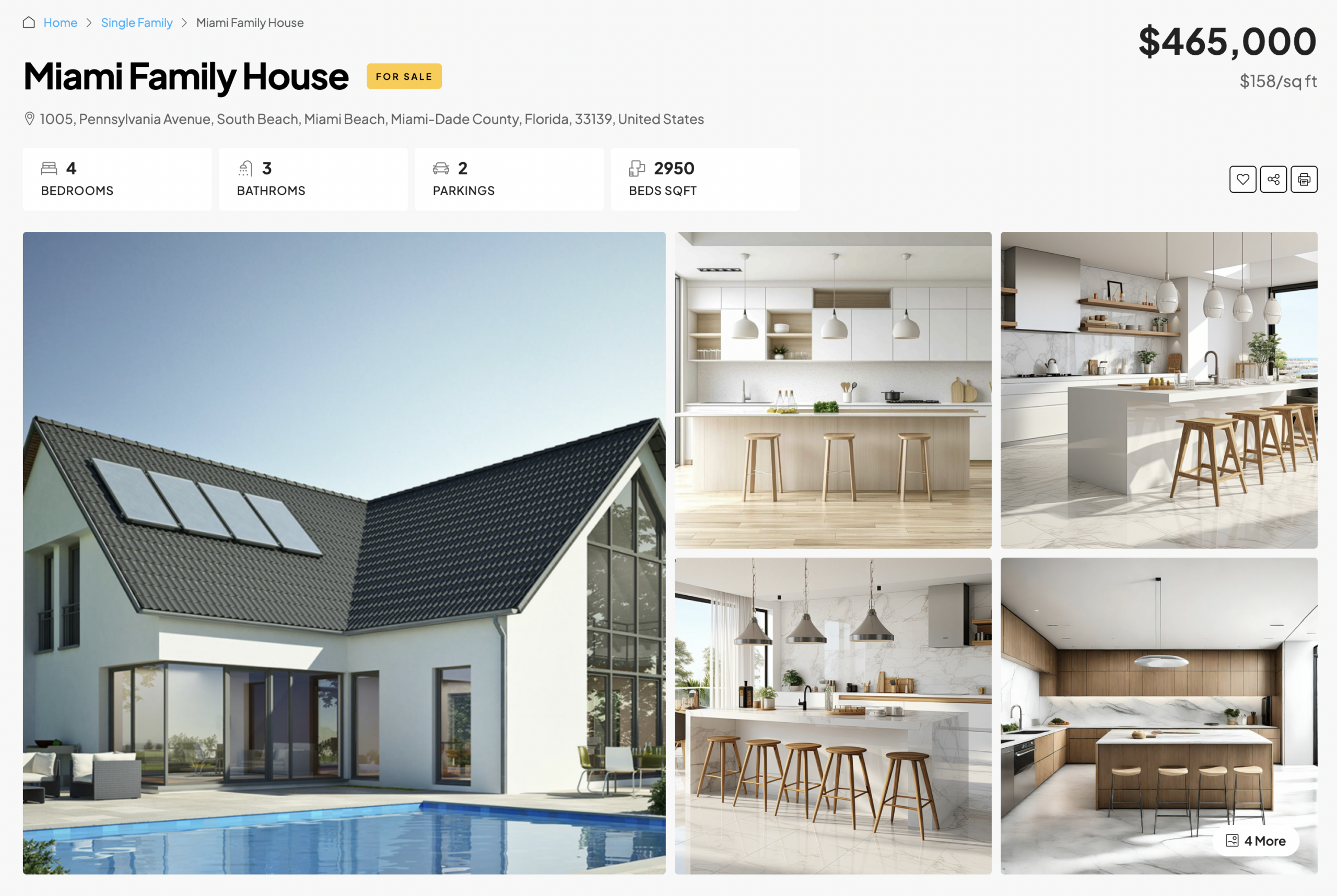
Every property listing on your website is an SEO opportunity. With the right optimization, individual listings can rank for specific search terms and attract direct traffic.
SEO-Friendly URLs
Keep your listing URLs clean and descriptive. Avoid auto-generated URLs with numbers and symbols.
Bad: yoursite.com/listing?id=48291
Better: yoursite.com/listings/4-bed-home-coral-gables-miami
Property Descriptions
Write unique, detailed descriptions for every listing. Avoid copy-pasting the same MLS description across dozens of pages. Instead, include:
- Property type, size, and key features
- Neighborhood context and nearby amenities
- School district information
- Lifestyle benefits and unique selling points
Use your target keywords naturally within the description — but always write for the reader first, not the search engine.
Images and Alt Text
High-quality images are essential for property listings. For SEO, every image needs descriptive alt text. Alt text helps search engines understand what an image shows and improves your accessibility.
Example alt text: “4-bedroom waterfront home for sale in Coral Gables Miami with private dock”
Structured Data
Structured data (also called schema markup) is code added to your pages that helps Google understand your content better. For real estate, this includes RealEstateListing schema, which can enable rich results in Google’s search display. Using a platform that supports property schema automatically gives you a significant technical advantage.
Internal Linking
Link related listings and content pages together. For example, a listing in South Beach should link to your South Beach neighborhood guide, your Miami market report, and your contact page. Internal linking helps search engines crawl your site and helps users navigate to relevant content.
Creating Content That Attracts Buyers and Sellers
Content marketing is one of the most powerful real estate SEO strategies available. By publishing valuable, locally focused content, you attract organic visitors and build authority in your market.
Your blog is your content hub. Here are the most effective content types to create, with practical examples for each.
Neighborhood Guides
Neighborhood guides rank for high-intent local searches and establish you as a local expert. Include information on schools, dining, transport links, parks, local events, and real estate trends.
Example: “Living in Wynwood Miami: The Ultimate Neighborhood Guide 2026”
Market Reports
Monthly or quarterly market reports attract sellers who want to understand current conditions. They also position you as a knowledgeable, data-driven agent.
Example: “Miami Real Estate Market Report: Q2 2026 Update”
Home Buying Guides
Step-by-step guides for first-time buyers are extremely popular and generate significant organic traffic. They also attract users early in the buying journey, giving you time to nurture the relationship.
Example: “How to Buy a Home in Florida: A Complete Guide for First-Time Buyers”
Home Selling Tips
Seller-focused content attracts homeowners thinking about listing their property. These readers convert into seller leads — one of the most valuable lead types in real estate.
Example: “How to Sell Your Home Fast in Miami: 12 Proven Strategies”
Investment Articles
Real estate investment content attracts a different but highly motivated audience. Investors are often repeat clients and referral sources.
Example: “Best Neighborhoods in Miami for Real Estate Investment in 2026”
Publish content consistently. Even one well-researched article per week can significantly increase your organic traffic over six to twelve months. Use your blog to target keywords that your listing pages cannot naturally capture.
Technical SEO for Real Estate Websites
Technical SEO refers to the behind-the-scenes factors that affect how search engines crawl, index, and rank your website. Even the best content will underperform if your technical foundation is weak.
Site Speed
Google considers page speed a direct ranking factor. A slow website also frustrates visitors and increases bounce rates. Use Google PageSpeed Insights (pagespeed.web.dev) to test your site and identify specific improvements.
Common speed improvements include compressing images, enabling browser caching, using a content delivery network (CDN), and minimizing unused CSS and JavaScript.
Mobile Responsiveness
More than 60% of all web searches now happen on mobile devices. Google uses mobile-first indexing, meaning it primarily evaluates the mobile version of your site for rankings. Your real estate website must be fully responsive and easy to use on any screen size.
Core Web Vitals
Core Web Vitals are Google’s set of metrics that measure real-world user experience. The three key metrics are:
- Largest Contentful Paint (LCP): How fast the main content loads — aim for under 2.5 seconds
- Interaction to Next Paint (INP): How quickly the page responds to user interactions — aim for under 200ms
- Cumulative Layout Shift (CLS): How stable the page layout is — aim for a score below 0.1
XML Sitemaps
An XML sitemap is a file that lists all the pages on your website and helps search engines discover and index your content more efficiently. Submit your sitemap to Google Search Console (search.google.com/search-console) to ensure all your listings and blog posts are indexed.
Indexing and Crawlability
Make sure search engines can crawl and index your important pages. Use your robots.txt file to block pages you do not want indexed (such as admin pages), and use canonical tags to avoid duplicate content issues — a common problem on listing sites where the same property may appear under multiple URLs.
How a Real Estate CRM Supports SEO Growth
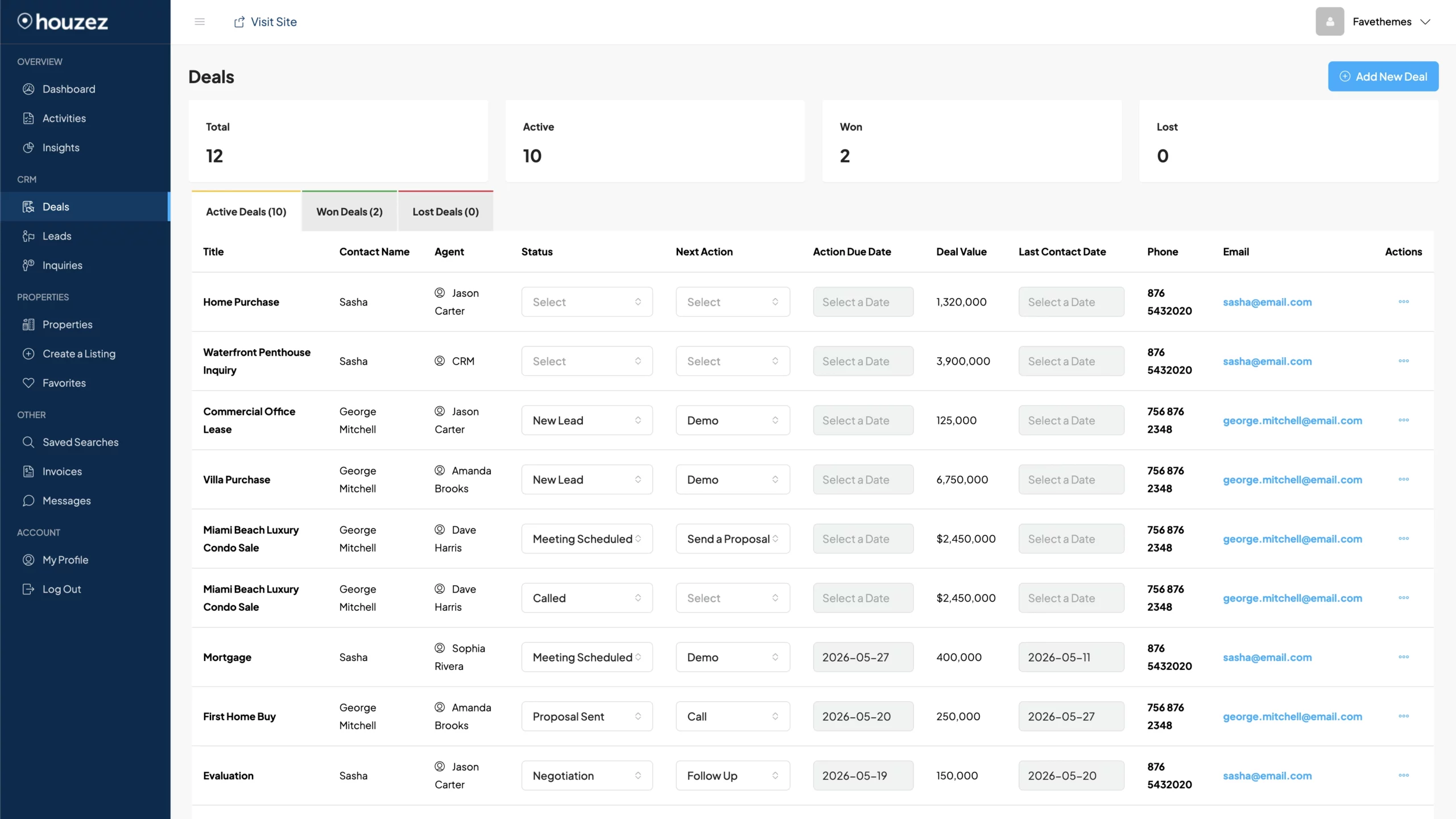
Driving organic traffic to your website is only part of the equation. Converting that traffic into leads, and then nurturing those leads into clients, is where a real estate CRM becomes essential.
Lead Capture
A CRM integrated with your website captures leads automatically from contact forms, property inquiries, saved search registrations, and newsletter sign-ups. Without a system in place, organic visitors may leave without any follow-up.
Follow-Ups and Lead Nurturing
Most real estate leads are not ready to buy or sell immediately. A CRM allows you to set up automated follow-up sequences that stay in touch with leads over weeks or months. When a lead is finally ready to act, your name is the first they think of — because you have been consistently in their inbox.
Conversion Tracking
A good CRM shows you which traffic sources, content pieces, and keywords are generating actual leads and closed deals. This data helps you focus your SEO efforts on what works and stop investing time in areas that do not convert.
Learn more about how a dedicated real estate CRM can support your lead pipeline.
Common Real Estate SEO Mistakes to Avoid
Even experienced agents make SEO mistakes that limit their results. Here are ten of the most common pitfalls and how to avoid them.
- Targeting keywords that are too broad. Competing for “homes for sale” nationally is nearly impossible. Focus on specific, local keywords instead.
- Duplicate content across listings. Using the same MLS description on multiple pages creates duplicate content issues. Always write unique descriptions.
- Ignoring mobile users. A website that is not mobile-friendly will be penalized in rankings and frustrate the majority of your visitors.
- Not claiming a Google Business Profile. Leaving your profile unclaimed means missing out on local search visibility and the Map Pack.
- Neglecting image optimization. Uploading raw, uncompressed photos slows your site and skips the opportunity to include keyword-rich alt text.
- Creating content with no local focus. Generic national content rarely ranks for local real estate searches. Every piece of content should have a local angle.
- Building no backlinks. Links from other reputable websites signal authority to Google. Partner with local businesses, contribute to local publications, and sponsor community events to earn links.
- Ignoring technical issues. Broken links, slow load times, and crawl errors all damage your rankings. Audit your site regularly using Google Search Console.
- Publishing thin content. Short, low-value pages do not rank well. Every page should thoroughly address the topic and satisfy the user’s search intent.
- Expecting overnight results. SEO is a long-term strategy. Most agents see meaningful results within three to six months. Consistency is the key.
- Not tracking performance. Without monitoring your rankings, traffic, and lead volume, you cannot improve. Set up Google Analytics and Google Search Console from day one.
Real Estate SEO Checklist
Use this checklist to audit and improve your real estate website’s SEO performance.
| ✓ Claimed Google Business Profile | ✓ Blog publishing at least monthly |
| ✓ NAP consistent across all directories | ✓ Neighborhood guide pages created |
| ✓ Collected at least 10 Google reviews | ✓ Internal links connect related pages |
| ✓ Keyword research completed | ✓ CRM integrated for lead capture |
| ✓ Local landing pages created | ✓ Property schema markup active |
| ✓ Property descriptions are unique | ✓ Google Analytics installed |
| ✓ All images have descriptive alt text | ✓ Google Search Console connected |
| ✓ XML sitemap submitted to Google | ✓ Robots.txt correctly configured |
| ✓ Website loads in under 3 seconds | ✓ Canonical tags on duplicate pages |
| ✓ Site is fully mobile responsive | ✓ Structured follow-up sequences active |
| ✓ Core Web Vitals pass Google thresholds | ✓ Backlink building strategy in place |
| ✓ No duplicate content on listing pages | ✓ Regular SEO audits scheduled |
How Houzez Helps Real Estate Agents Improve SEO
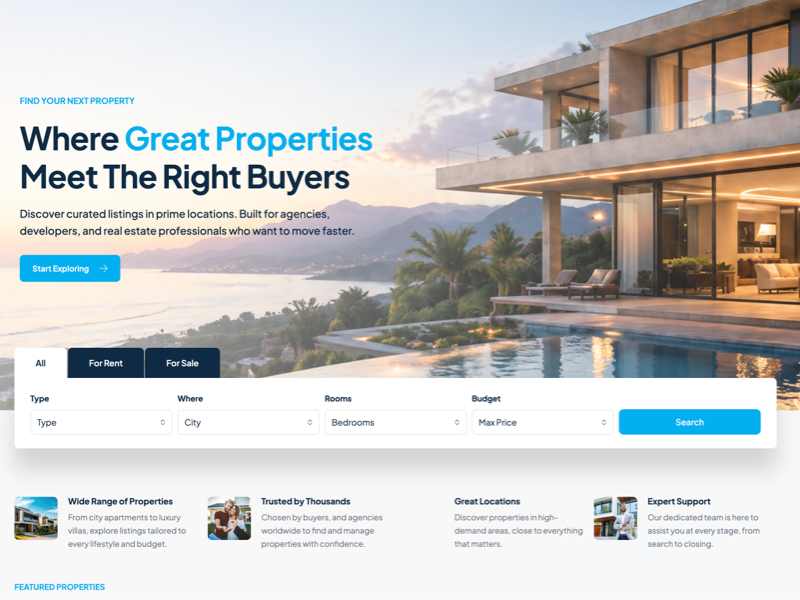
Implementing the strategies in this guide requires a website foundation built for real estate SEO. Houzez is a WordPress theme and platform specifically designed for real estate agents, brokers, and agencies — and it addresses many of the technical and content requirements covered above.
SEO-Friendly Architecture
Houzez is built with clean, semantic HTML that search engines can read and index efficiently. The theme generates structured, crawlable pages without the bloated code that slows many generic website builders.
Fast Loading Pages
Page speed is a ranking factor, and Houzez is optimized for performance. Lightweight code, image optimization support, and compatibility with caching plugins help your site load quickly and pass Core Web Vitals checks.
Mobile Responsive Design
Every Houzez template is fully responsive. Whether a visitor arrives on a smartphone, tablet, or desktop, they get a consistent, professional experience — satisfying Google’s mobile-first indexing requirements.
Property Schema Support
Houzez includes built-in support for property structured data, which helps Google understand your listings and can improve how they appear in search results.
Agent, Agency, and Local Area Pages
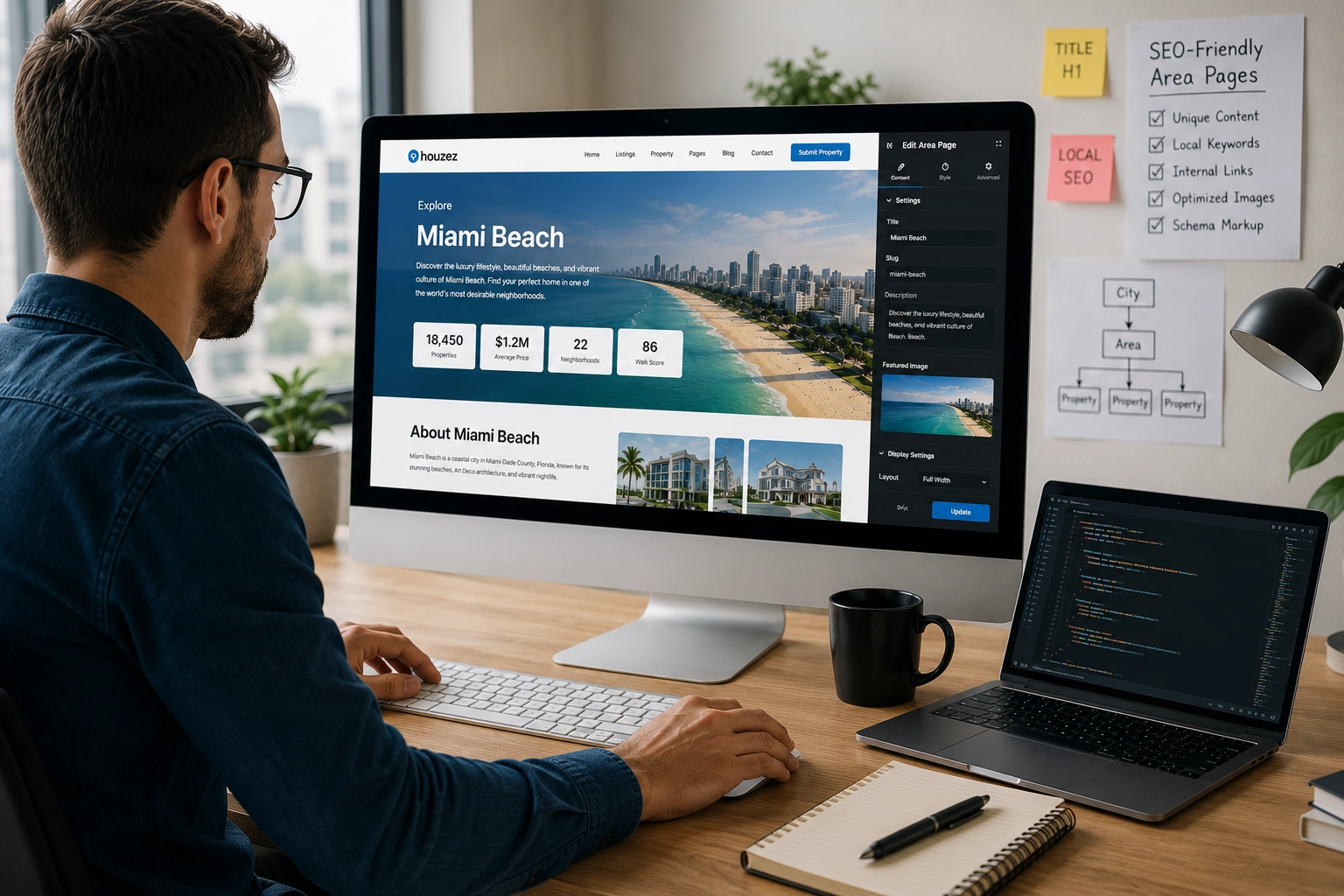
The platform supports dedicated pages for individual agents, agencies, and local areas. These pages target agent-specific and location-specific search terms that are critical for local SEO.
Blog Functionality
Houzez includes a fully featured blog, making it easy to publish neighborhood guides, market reports, and buyer and seller content — all within your own website rather than a third-party platform.
CRM Integration
The built-in Houzez CRM captures leads from your website automatically and provides tools to follow up, nurture, and track leads through the sales process — turning your SEO traffic into real business.
IDX/MLS Support
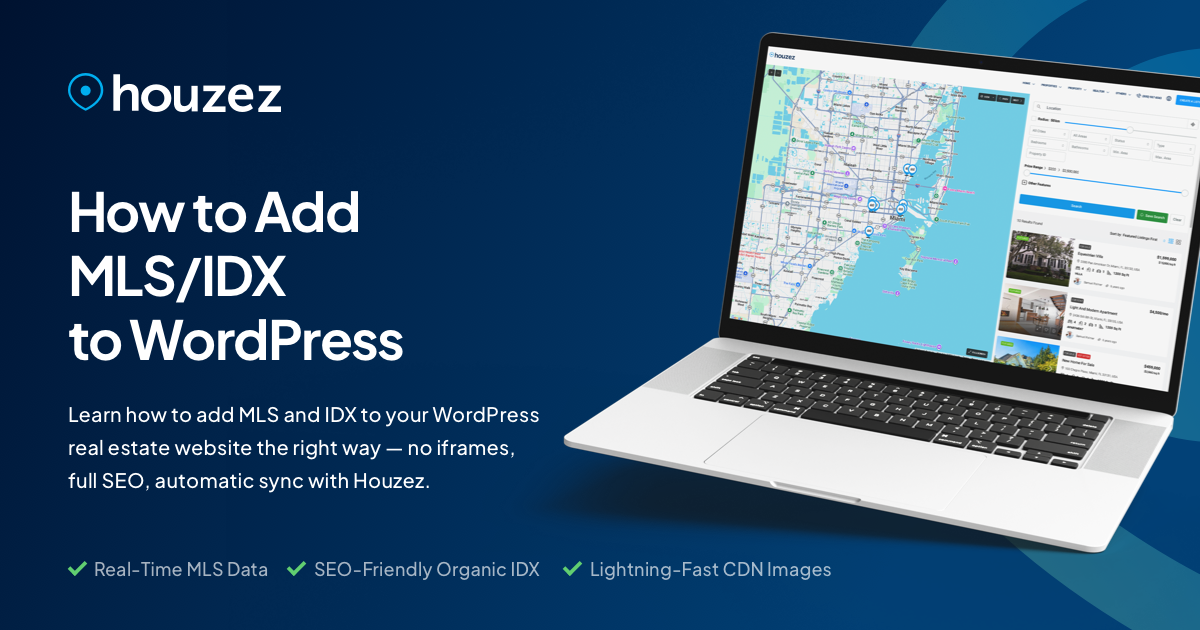
Houzez supports IDX and MLS integration, allowing you to display live listings directly on your website. More listings mean more indexed pages and more opportunities to rank for property-specific searches.
Search Builder
The advanced search builder lets visitors filter properties by location, price, property type, and dozens of other criteria — creating a better user experience and reducing bounce rates, both of which support better rankings.
Elementor Compatibility
Houzez works seamlessly with Elementor, giving you full visual control over your pages without requiring code. This makes it easy to build and optimize landing pages, neighborhood guides, and lead capture pages exactly the way you need them.
Final Thoughts
SEO for real estate agents is one of the most powerful long-term investments you can make in your business. Unlike paid advertising that stops the moment your budget runs out, a well-executed SEO strategy continues to generate traffic, leads, and clients month after month.
The key takeaways from this guide are straightforward. Start with local SEO — optimize your Google Business Profile, build local landing pages, and gather reviews. Invest in keyword research so your content matches what your ideal clients are actually searching for. Optimize every property listing with unique descriptions, proper image alt text, and structured data. Publish consistent blog content that addresses local questions and builds your authority.
On the technical side, ensure your site loads quickly, works flawlessly on mobile, and is properly indexed by Google. Integrate a CRM so that every visitor your SEO brings in has the opportunity to become a lead.
Most importantly, be patient and consistent. SEO rewards long-term effort. Agents who commit to the strategy and execute it methodically are the ones who ultimately dominate their local search results — and their local market.
Start with one or two actions from this guide today. Build from there. Over time, each improvement compounds, and the results speak for themselves.
Frequently Asked Questions About SEO for Real Estate Agents
How long does it take for SEO to work for real estate agents?
Most real estate agents begin to see meaningful results from SEO within three to six months of consistent effort. Highly competitive markets may take six to twelve months to see significant ranking improvements. Technical fixes and Google Business Profile optimization can show results faster, sometimes within four to eight weeks.
What is the most important SEO strategy for realtors?
Local SEO is the most important strategy for most real estate agents. Optimizing your Google Business Profile, building location-specific landing pages, earning local reviews, and maintaining consistent NAP information across directories are the highest-impact activities for generating local leads from search.
Do I need a blog to rank in real estate SEO?
A blog significantly accelerates your SEO results. It allows you to target informational keywords, build topical authority, attract backlinks, and keep your site regularly updated with fresh content. Agents with active blogs typically generate more organic traffic than those without one.
What are the best keywords for real estate agents?
The best keywords combine a location with a property type or buyer/seller action. Examples include “[city] homes for sale,” “real estate agent in [area],” “how to sell a house in [city],” and “[neighborhood] condos for sale.” Long-tail keywords with specific locations and property types often convert better than broad, generic terms.
How does a real estate CRM help with SEO?
A CRM does not directly improve your search rankings, but it is essential for converting organic traffic into leads and clients. It captures lead information automatically, enables systematic follow-up, and tracks which traffic sources and pages are generating the most business — helping you focus SEO efforts where they have the greatest impact.
Is paid advertising or SEO better for real estate agents?
Both have a role, but they serve different purposes. Paid advertising delivers immediate visibility and can generate leads quickly, but it is expensive and stops the moment you stop paying. SEO takes longer to build but delivers compounding, lower-cost traffic over time. The most effective real estate marketing strategies combine both.
What technical SEO factors matter most for real estate websites?
The most critical technical factors for real estate websites are mobile responsiveness, page load speed, Core Web Vitals compliance, XML sitemap submission, and avoiding duplicate content across listing pages. Properties structured data markup (schema) is also particularly valuable for real estate sites.
How many local landing pages should a real estate agent create?
Create at least one page for every neighborhood, city, district, or geographic area you actively serve. Start with your primary markets and expand over time. Each page should include unique local content, relevant listings, and location-specific keywords — not just the same template text with a different city name swapped in.